Data Context for SQL
Stop AI from guessing what “revenue” means.
For connected SQL databases, review and publish business meaning for tables, fields, relationships, and metrics, so analysis starts from your team’s definitions instead of a guess.
Swipe to inspect the interface
Sounds right, quietly wrong
Why general AI gets metrics wrong.
A general assistant sees column names, not your business rules. It fills the gaps with reasonable guesses, and the result reads like a real answer. Data Context replaces three common guesses with definitions your team publishes.
Wrong definition
“Revenue” is gross in one answer and net in the next.
Without your rule, AI picks a reasonable meaning. Gross or net of refunds? Is an “active user” someone who logged in or someone who paid?
Published metrics. Define Net Revenue or Active Users once, with a description and format, and analysis of that data starts from it.
Wrong grain
Order lines counted as orders.
When a table holds one row per line item, counting rows overstates orders and average order value comes out too low.
Dataset grain. State what one row represents, such as “one row per order line,” so counts and averages start from the right unit.
Wrong join
A join that quietly double-counts revenue.
Join orders to a table with several rows per order, and each order’s revenue is repeated once for every match.
Approved relationships. Set the join fields and cardinality, such as many-to-one, so Better Analyst knows how your tables connect.
Data Context covers connected SQL databases today. For uploaded files, Google Analytics, and Search Console, state your definition in the question or in an AI Agent’s instructions, and check the code shown with every answer.
Definitions people can read
Turn physical fields into business language.
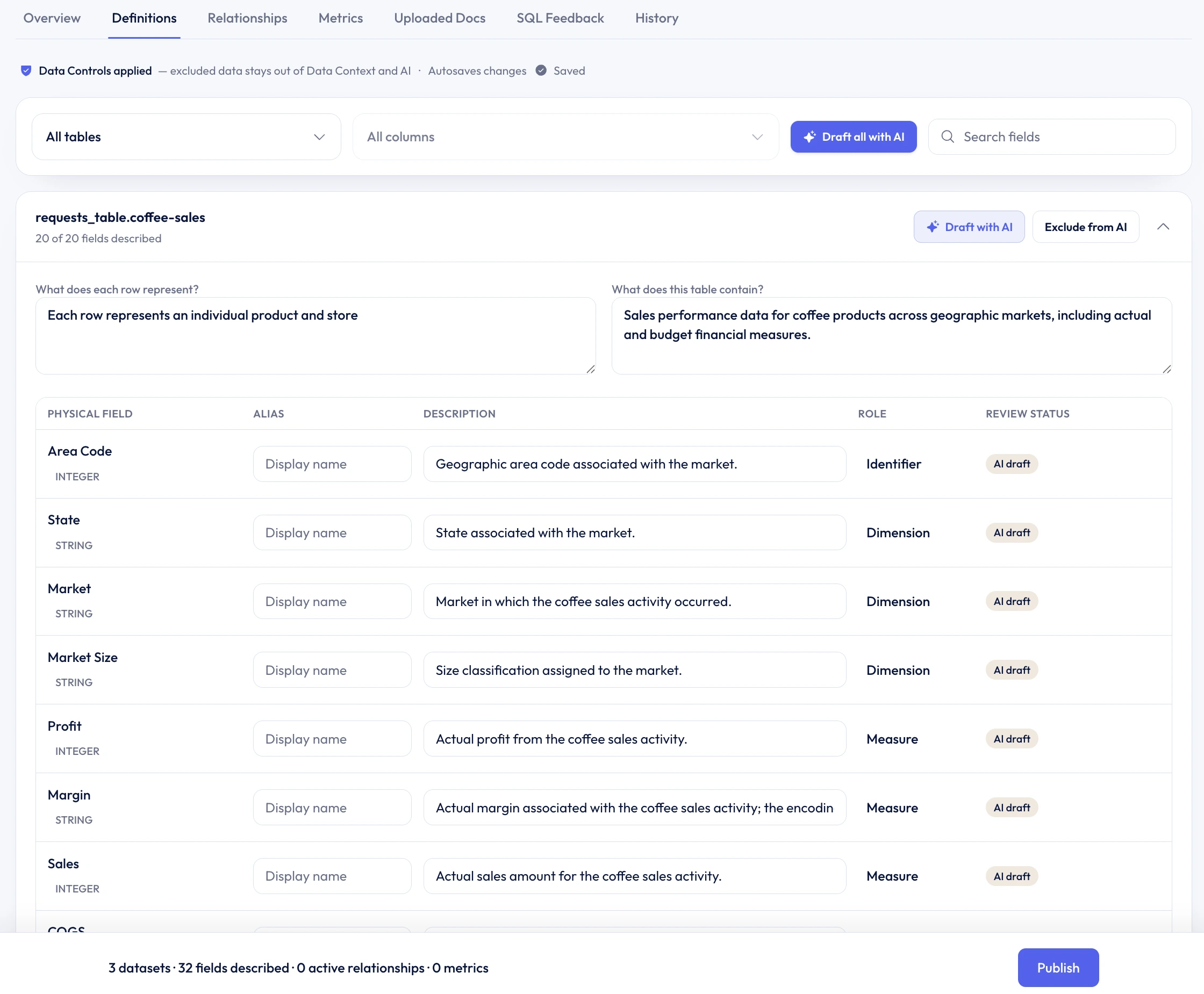
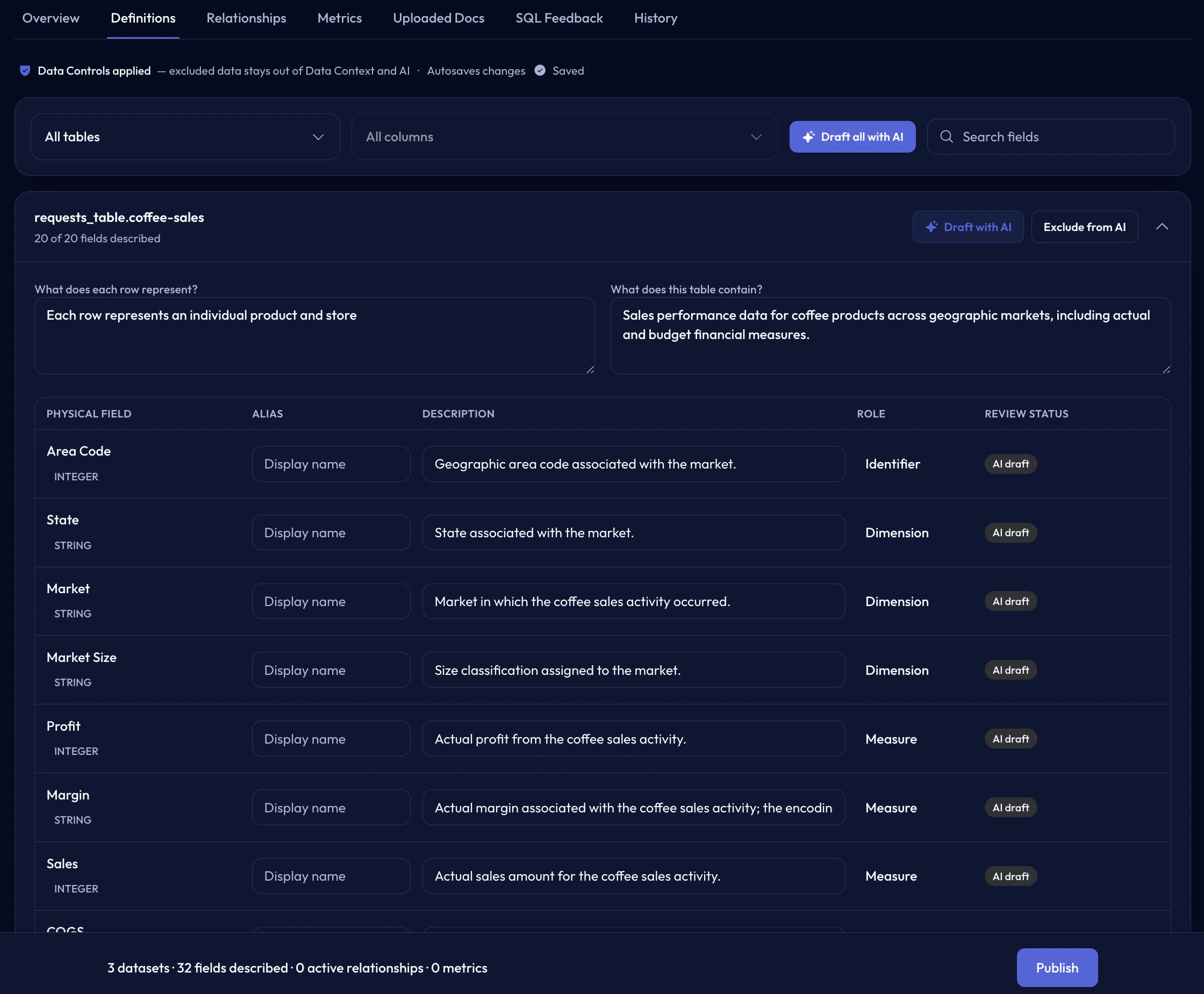
Add a description and grain for each table. For every field, review its Alias, Description, Role, and Review status alongside the physical database name.
- Keep physical names visible for traceability.
- Use approved aliases and descriptions in analysis.
- Mark identifiers, dimensions, measures, and timestamps by role.
Joins and calculations
Approve how data connects—and how the business calculates.
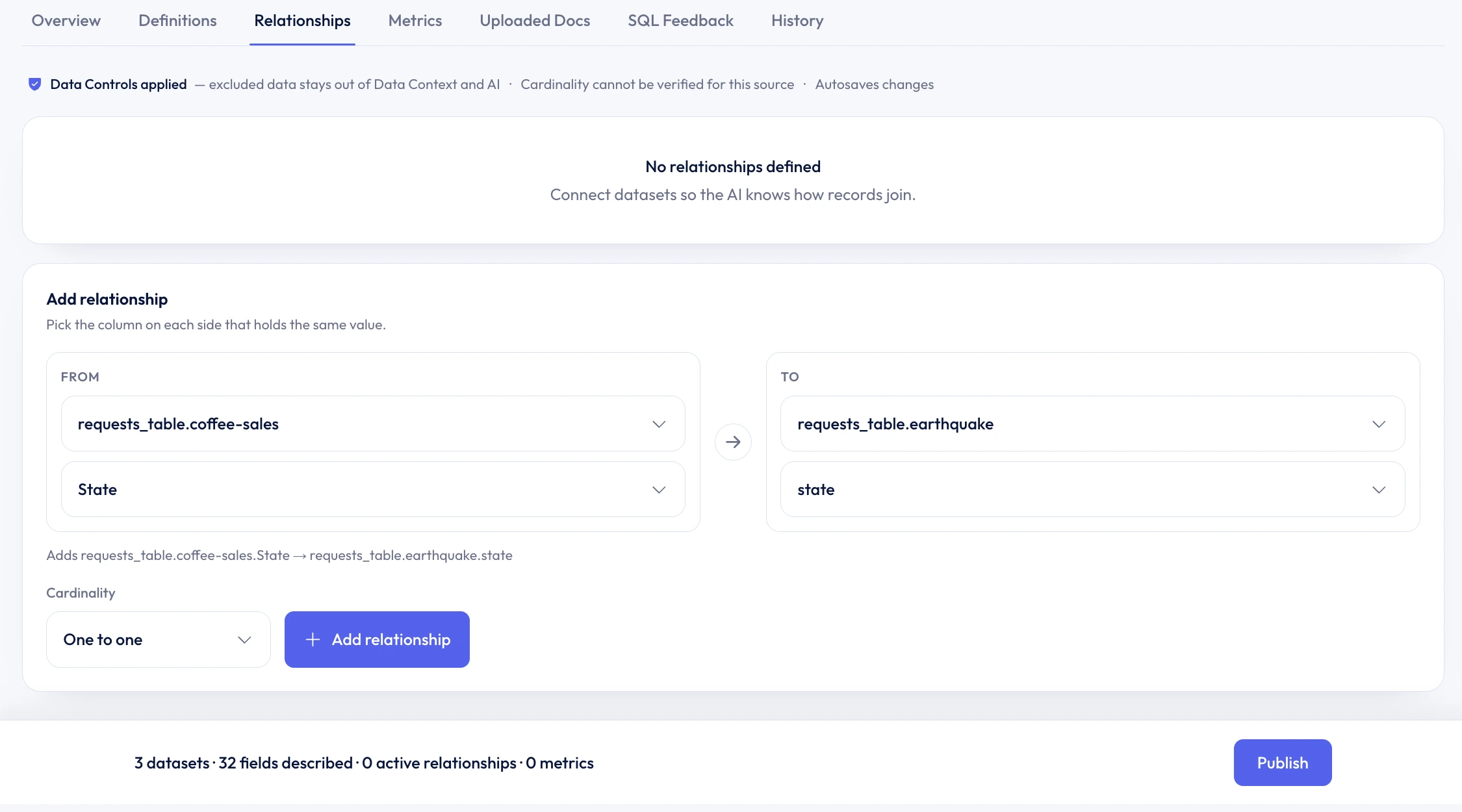
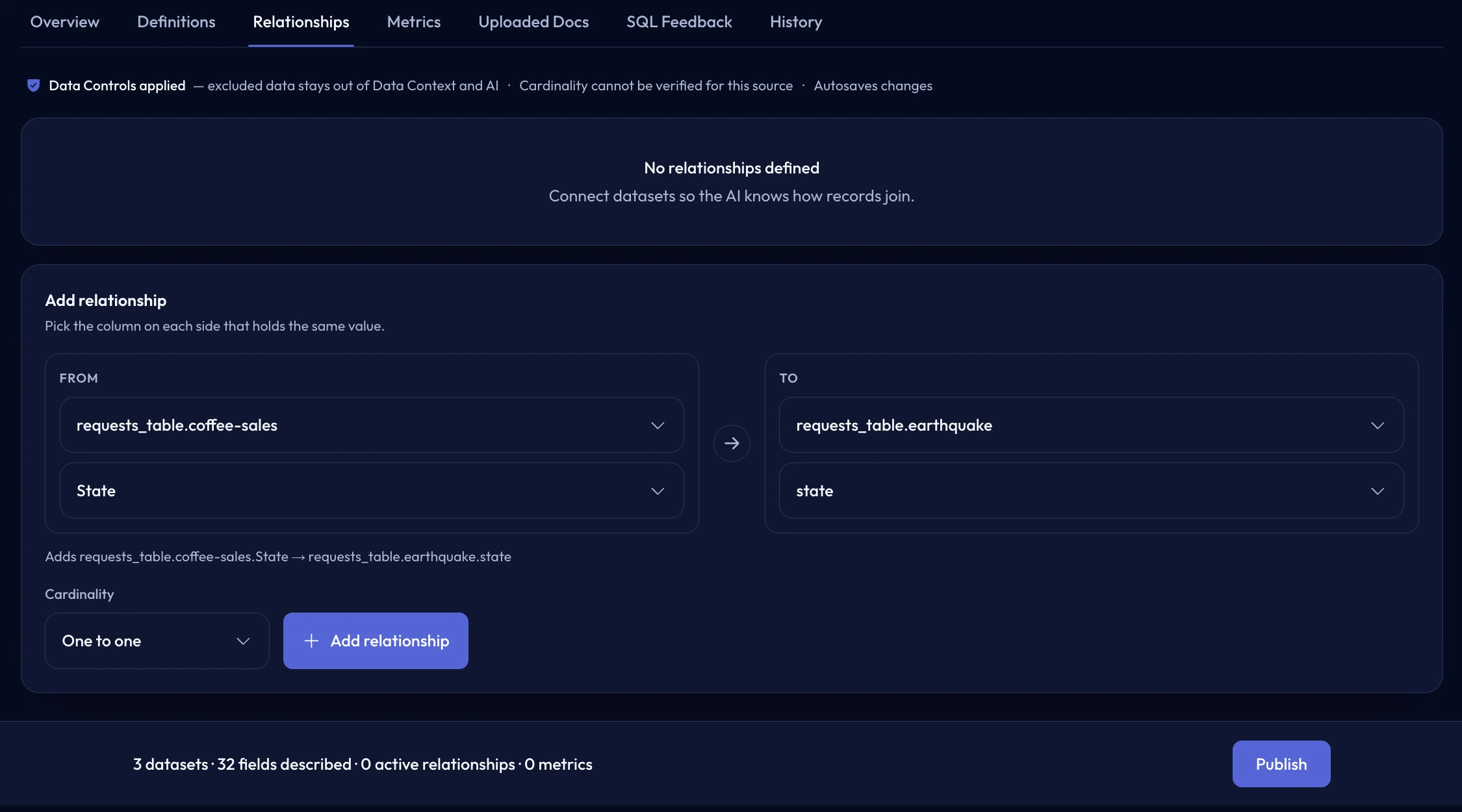
Relationships tell Better Analyst which tables can be joined. Metrics give recurring calculations a shared name and definition.
Swipe to inspect the interface
RelationshipsDefine the source, destination, join fields, and cardinality so Better Analyst knows how records connect. 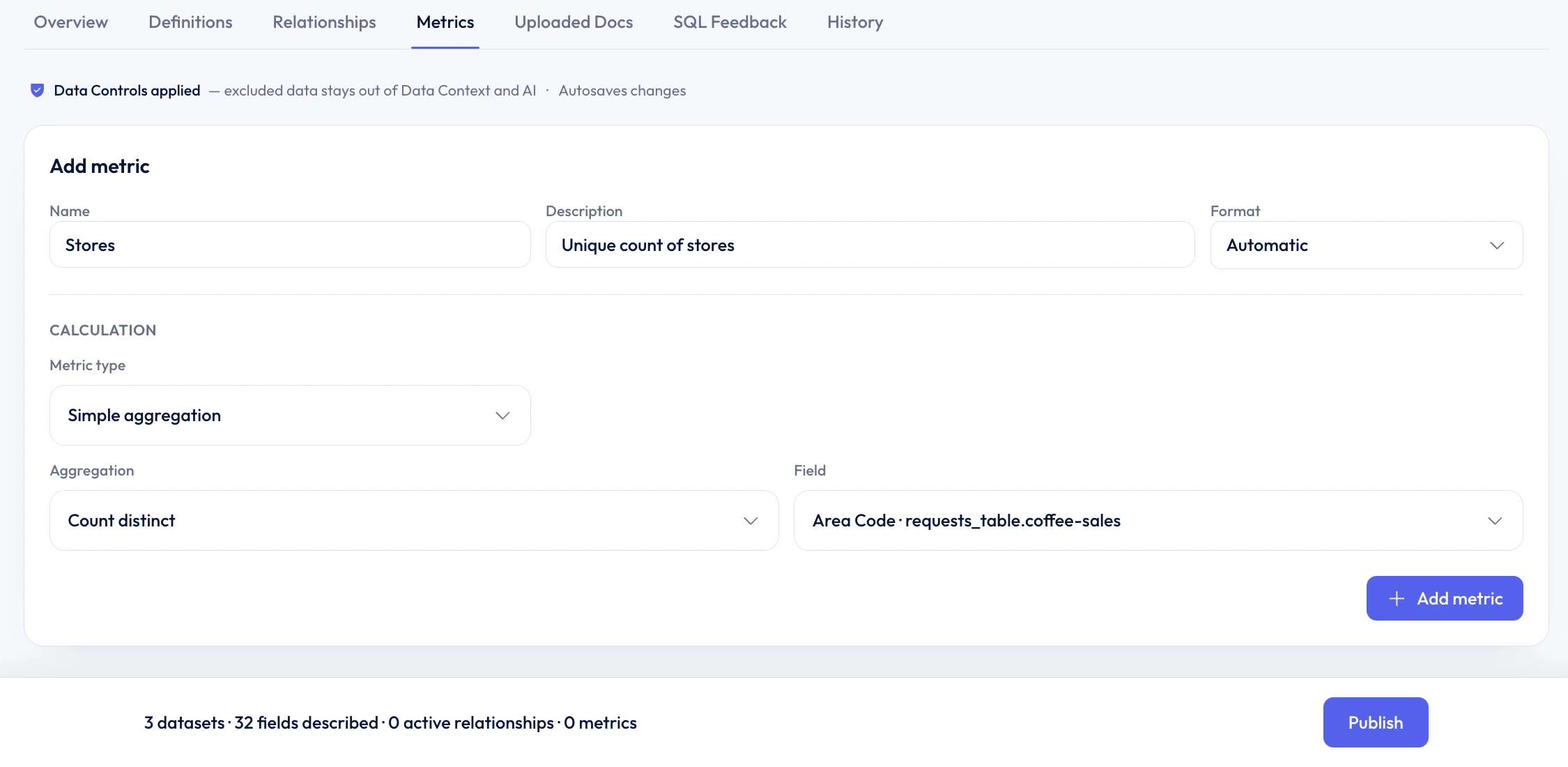
Swipe to inspect the interface
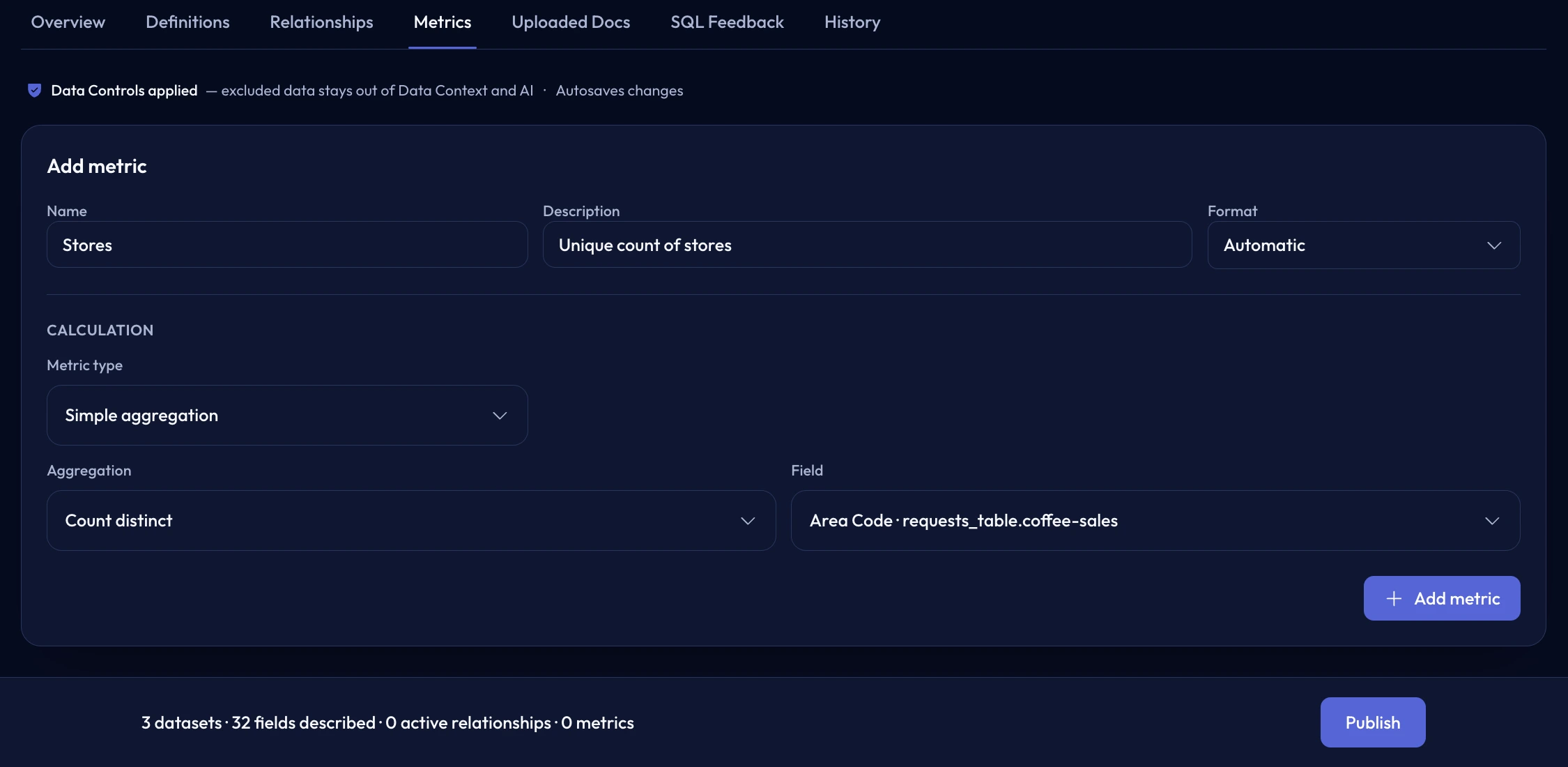
MetricsPublish simple aggregations and derived calculations such as Net Revenue with descriptions and formats.
Documents and SQL feedback
Add the meaning schemas miss. Teach from corrections.
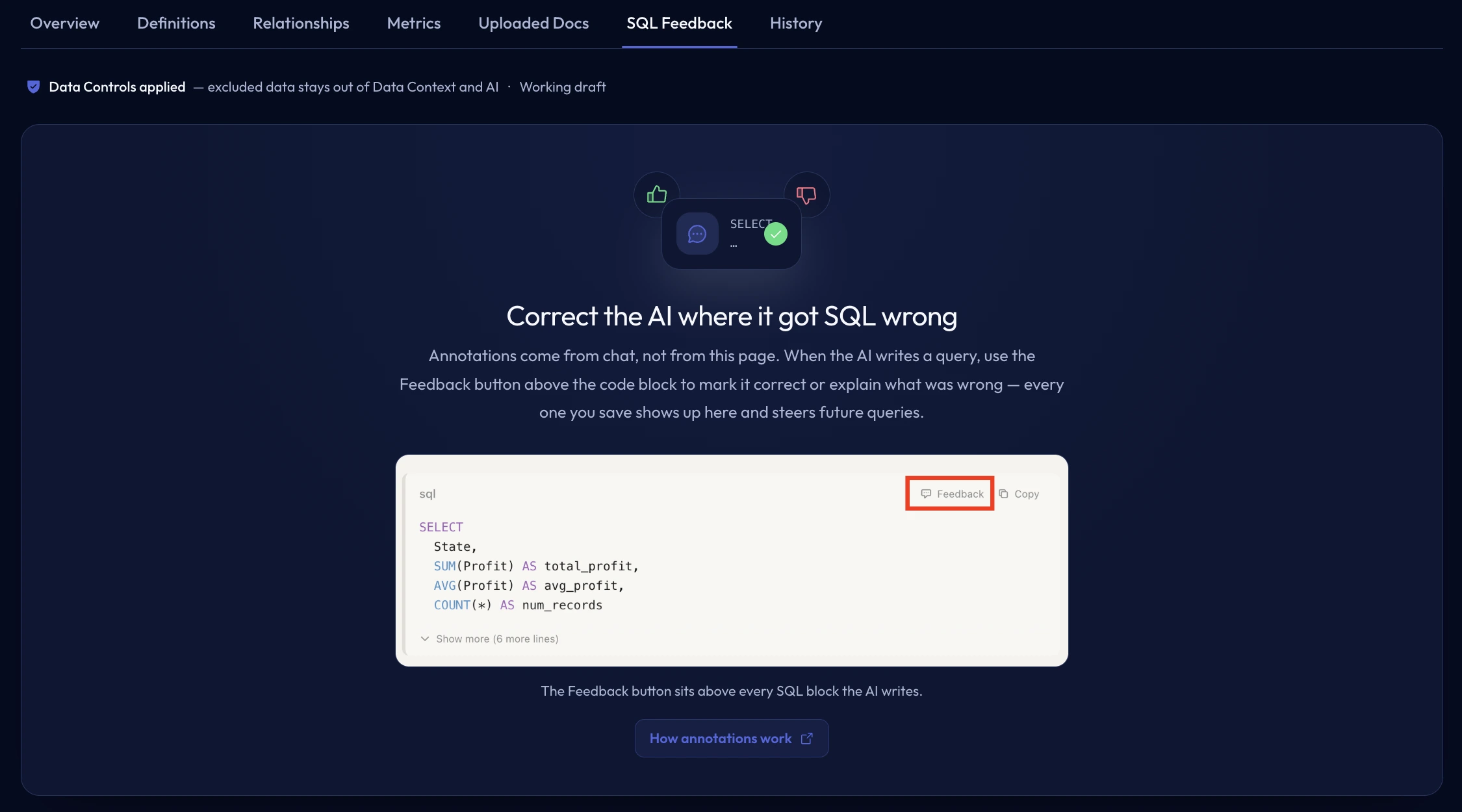
Upload business vocabulary and schema notes, then save SQL feedback from chat to steer future queries.
Swipe to inspect the interface
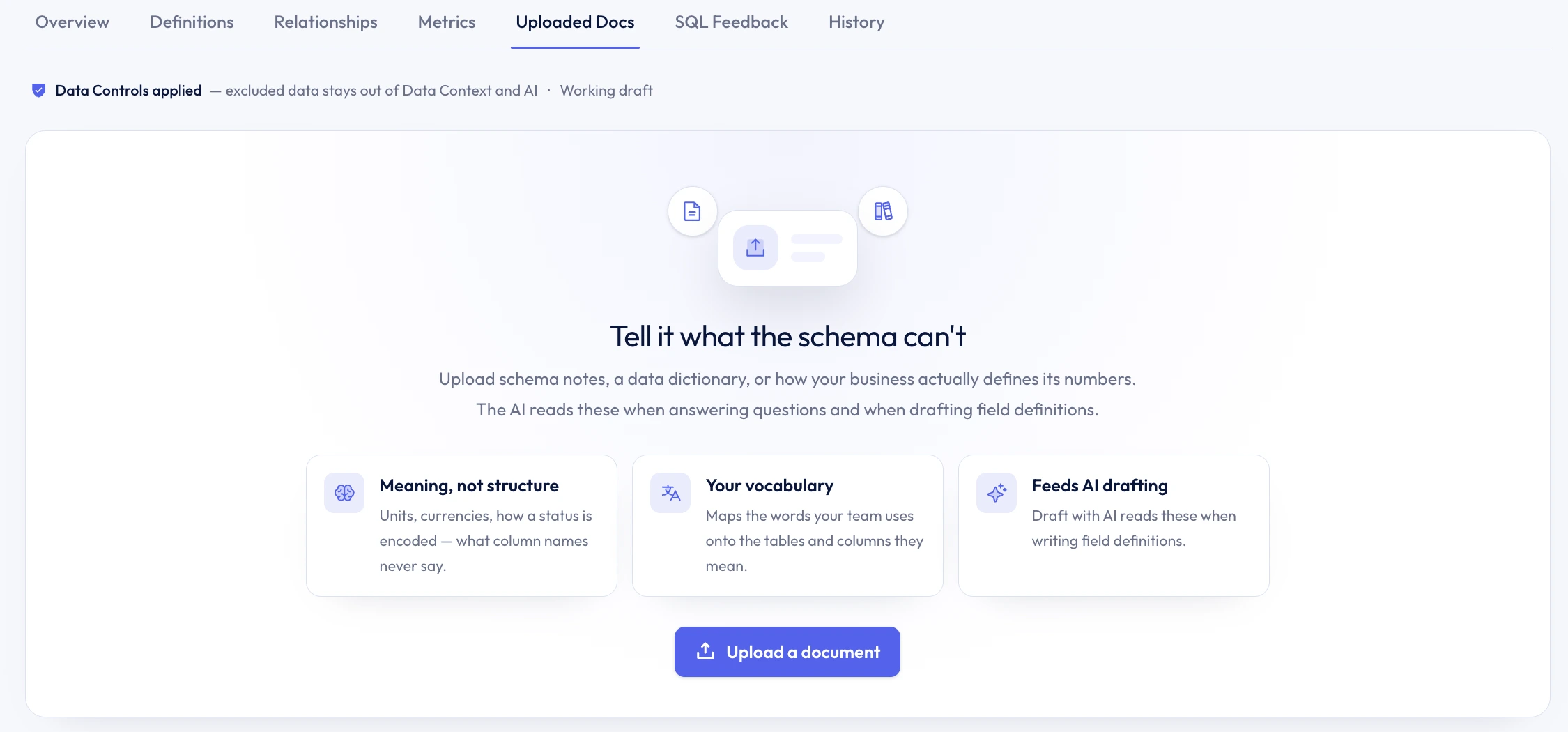
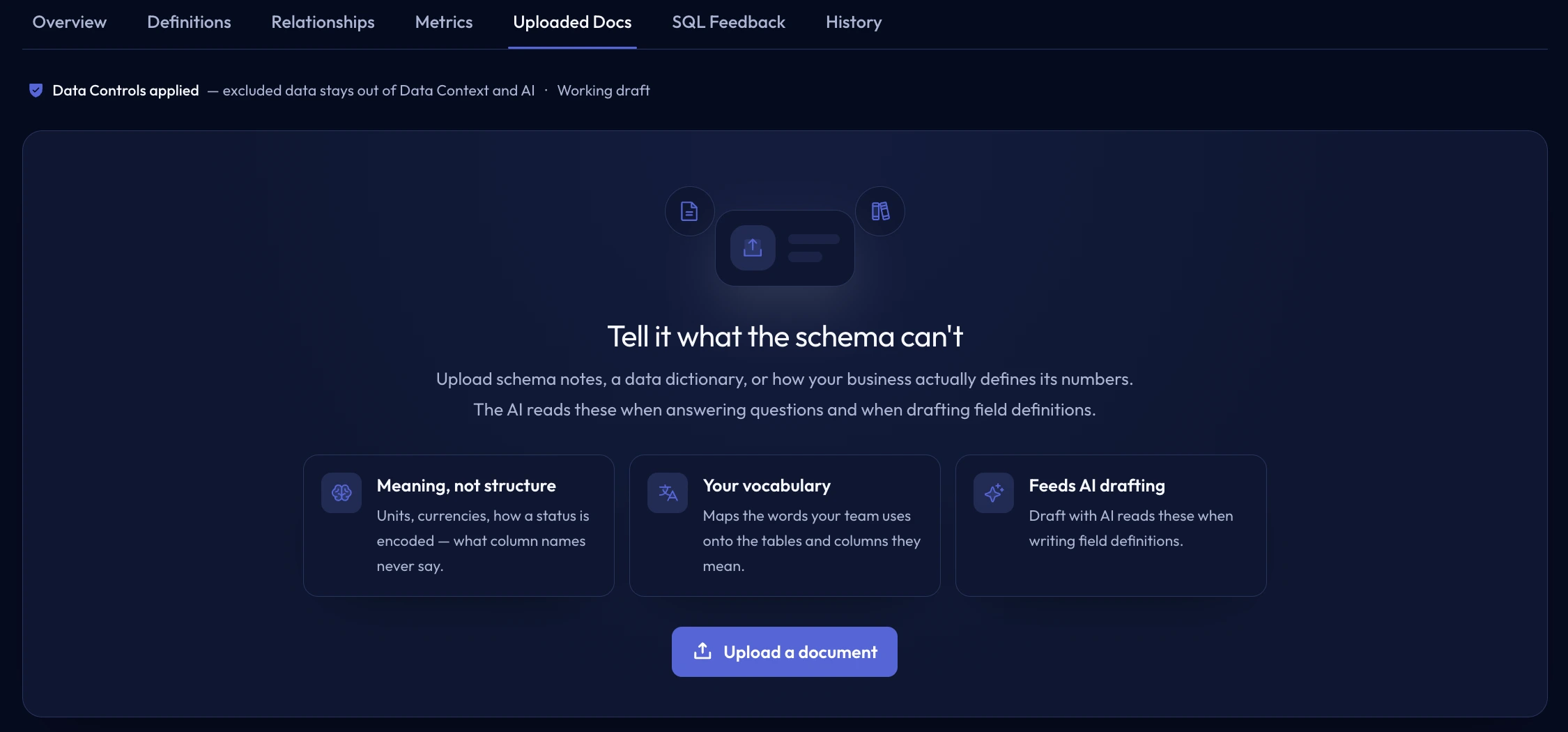
Uploaded DocsAdd schema notes, data dictionaries, and vocabulary that inform field drafting and answers. 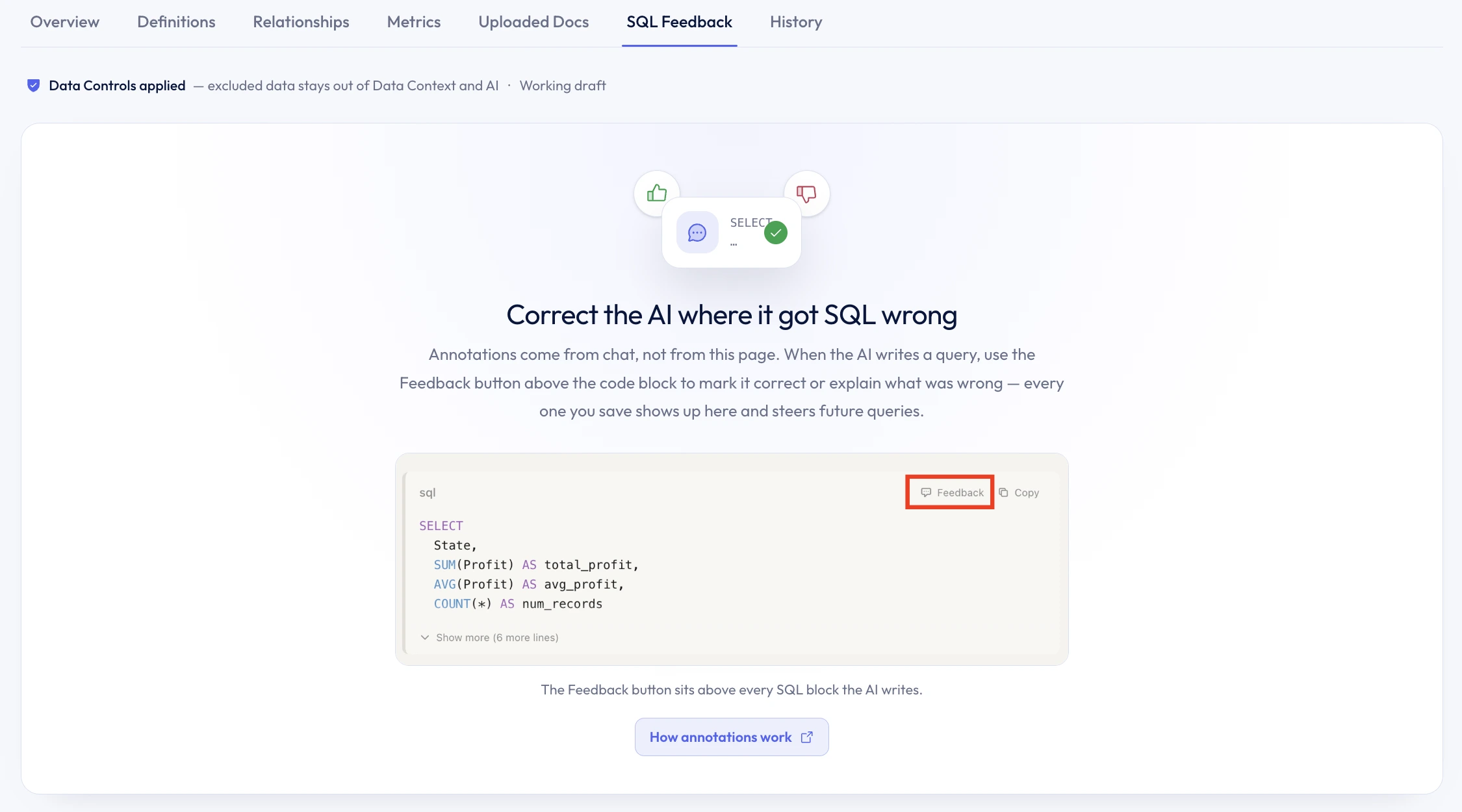
Swipe to inspect the interface
SQL FeedbackSave correct or incorrect query annotations from chat so reviewed feedback can steer future SQL.
A controlled meaning layer
Describe connected data without changing the data itself.
Data Context works as a lightweight semantic layer for teams without a data team. Data Controls keep excluded data out of Data Context and AI. Drafts, published revisions, and history make it clear which definitions are active. On a team source with per-member access, a member who has tables or columns hidden from them doesn't get that source's Data Context, uploaded documents, or SQL feedback, since those can name what's hidden.
Data Context describes connected data; it is not the dataset and it does not replace AI Agents.
How analysis should run
Need to configure the analyst too?
AI Agents define analysis instructions, Business Context, output preferences, and presentation defaults.
FAQ
Data Context questions
What a semantic layer is, which data it covers, and who publishes definitions.
Is Data Context a semantic layer?
Which data sources does Data Context support?
Does Data Context make every answer correct?
Do we have to write every definition by hand?
Who can change published definitions?
How does Data Context work with Data Controls?
Can Better Analyst reuse queries we trust?
Which plans include Data Context?
Compare your options
Decide with evidence, not a sales pitch.
Open a neutral research prompt in the AI tool you already use. Compare capabilities, limitations, and fit before you choose.
- 01ChatGPTOpen a balanced comparison prompt in ChatGPT.
- 02ClaudeOpen the same research prompt in Claude.
- 03PerplexityResearch the comparison with linked web sources.
AI answers can be incomplete. Check source links, current pricing, and product documentation before deciding.
A shared SQL vocabulary
Teach AI what your SQL data means.
Connect a supported SQL database, review its definitions, and publish the context you trust.